
Gregg County Projected Versus Actual Release
A projected release date is an agency calculation, not proof that custody ended. TDCJ uses the exact label “Projected Release Date.” Classification and Records calculates it from the offense, offense date, sentence, credits, and the release rules that apply. A scheduled release date and scheduled release location appear later in processing and may be closer to an operational plan. TDCJ still warns that those entries can change. The actual release record is the final evidence that the person left that custodian.
County jail cases work differently. A pretrial detainee may leave after bond is posted, a magistrate or court signs an order, charges are rejected, or another agency takes custody. None creates a dependable countdown. A sentenced Gregg County Jail inmate may have a local sentence calculation, but no public Gregg policy in the research promises a fixed good-time formula.
Find a Gregg County Release Date
Identify the custody track before searching. South Jail, North Jail, and Marvin A. Smith Corrections Facility form one Gregg County jail system. Moving between those buildings is not release. A transfer to TDCJ ends county custody but does not mean release to the community. The TDCJ offender record then becomes the main state source.
- Use the booking number, full name, date of birth, cause number, TDCJ number, or State Identification number to confirm identity.
- For current Gregg jail custody, check the official Odyssey route and call the jail at 903-236-1755 when the legacy portal does not respond.
- For a state sentence, search the TDCJ offender search and read each date label exactly.
- If the online result is absent or incomplete, use TDCJ inmate information by email or the official telephone channel.
- For a county sentence, request the jail's sentence calculation and actual release record, then compare it with the judgment and jail-day credit.
- Confirm any transfer, detainer, parole action, or court order with the agency that issued it.
The Gregg County release-record path covers booking-level fields and the targeted public-information request used after a person drops off the live roster.
Gregg County TDCJ Date Fields
TDCJ publishes several dates that answer different questions. Not all fields appear in every record. A public search is also not promised as a complete historical discharge index for every former prisoner. When a past record cannot be located, request incarceration and release history through TDCJ and compare it with the conviction case.
| Field | What it means |
|---|---|
| Projected Release Date | The current calculated date under the governing release method; it can move. |
| Parole Eligibility Date | The earliest statutory review point, not approval and not physical release. |
| Scheduled Release Date | A later operational plan after release processing advances; still changeable. |
| Scheduled Release Location | The planned TDCJ release site, which may change before execution. |
| Maximum Sentence Date | The calculated sentence-expiration point, subject to the lawful sentence record. |
| Actual release or discharge | Evidence that TDCJ custody ended on the recorded date and by the stated type. |
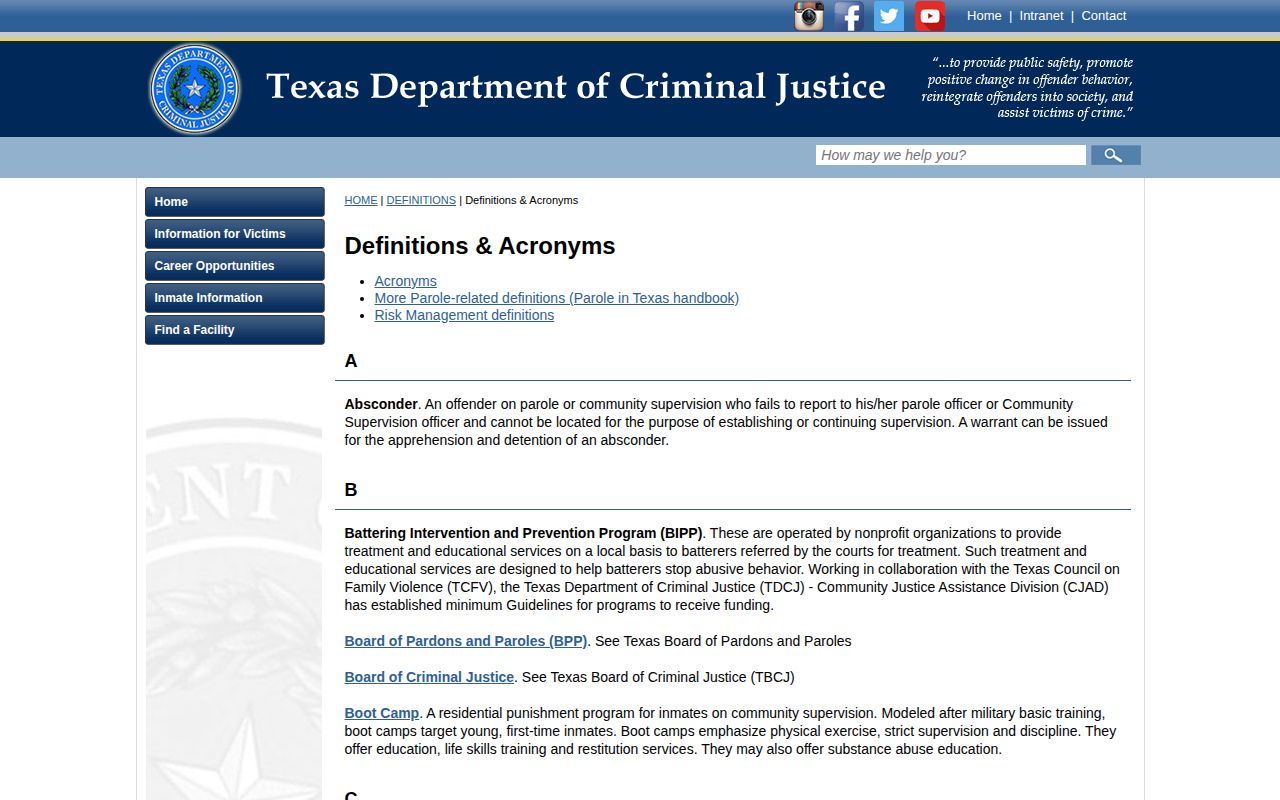
The official TDCJ definitions page gives the source terms used in results.
Read the displayed field beside the individual record rather than turning one Texas term into another.
Note: Eligibility is a chance for review, while scheduled release reflects later planning and actual release records completed custody movement.
Texas Good Time for Gregg Releases
Texas has no blanket rule that every prisoner must serve eighty-five percent of a sentence. It also has no safe universal fifty-percent promise. For many serious offenses listed through Code of Criminal Procedure Article 42A.054, Government Code Section 508.145 applies a calendar-time threshold commonly based on one-half of the sentence, with a two-year minimum and thirty-year maximum. Good-conduct time does not reduce that particular threshold. Offense type, offense date, and statutory exceptions control.
TDCJ good conduct time is governed by Government Code Chapter 498. Credits arise from classification and qualifying conduct or participation. They can affect classification and a release calculation where the governing law permits, but they do not guarantee parole. Section 508.149 excludes specified cases from mandatory supervision. Pre-1996 and post-1996 eligible cases can also use different mandatory-supervision rules.
At the county level, Code of Criminal Procedure Article 42.032 says a sheriff may award good-conduct commutation, within statutory limits. The word “may” matters. Article 42.033 permits a judge to authorize intermittent service in eligible cases. Neither provision supplies a published Gregg County half-time rule. Ask the Gregg jail for its calculation in the individual case.
What Changes Gregg County Release Dates
A projected date is recalculated as the record changes. One factor may move the date earlier, while another may prevent community release even after the sentence calculation reaches a target. The agency record should identify the basis instead of leaving readers to infer it from a roster change.
| Factor | Possible effect | Where to verify |
|---|---|---|
| Credit earning or loss | Changes a calculation where Texas law permits credits to count | TDCJ Classification and Records or Gregg jail sentence record |
| Parole decision | Approval may create a path to earlier release; denial may set later review | BPP result and TDCJ release processing |
| Program requirement | An FI or RMS vote may require a program before release | BPP vote legend and individual result |
| New sentence or court order | May alter the controlling term or credit | Gregg County judgment and later orders |
| Detainer or hold | May cause transfer to another county, USMS, or ICE instead of community release | Current custodian and receiving agency |
| Audit or record correction | Can change a field after TDCJ reviews sentence data | TDCJ Classification and Records |
A BPP approval can be rescinded or withdrawn. Likewise, a bond docket event does not prove that a Gregg jail completed release. Each step must be paired with the custody record.
Gregg County Parole Date Review
Texas parole panels review files rather than holding public formal hearings for ordinary parole consideration. Initial review processing may begin about six months before eligibility, while later reviews may begin about four months before the next review. These periods are not hearing dates. They also do not guarantee a vote or release on a set day.
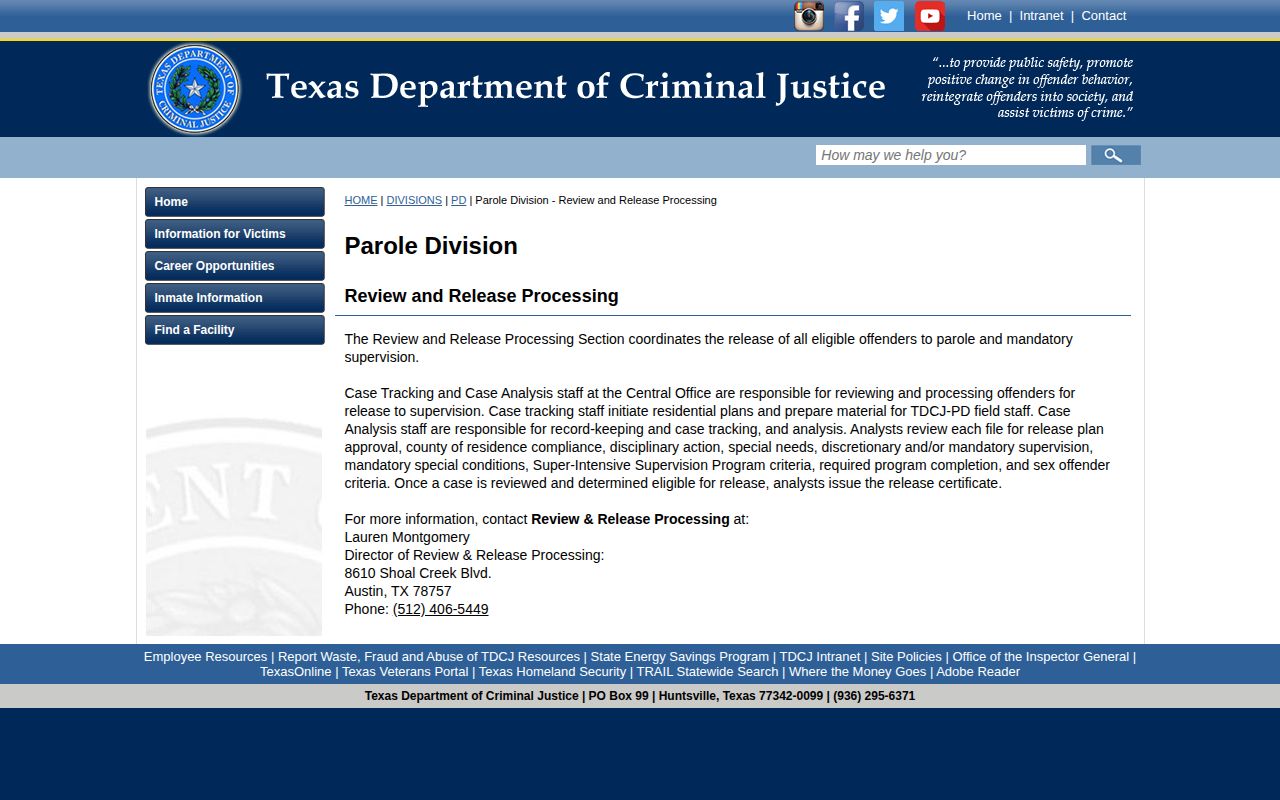
The TDCJ Review and Release Processing office coordinates steps after an approval, including plans and scheduled information. FI and RMS votes can carry program or timing conditions. NR, SA, and DMS results can deny release or lead to later review. A scheduled location may appear only once processing has advanced.
Mandatory supervision is another distinct path. For eligible cases before September 1996, flat time plus good time can reach the sentence term under the older framework. For eligible cases after that change, reaching the credit threshold does not by itself cause release. The Board of Pardons and Paroles must approve discretionary mandatory supervision. A case excluded by Section 508.149 ordinarily projects toward maximum expiration unless another lawful release route applies. These differences explain why two people with similar sentence lengths can show unlike projected dates.
A parole vote also needs careful reading. Eligibility means that review may occur. It does not show that a panel approved release. An approval code may require a treatment program, additional investigation, a release plan, or another condition before TDCJ schedules the event. A denial can set a later review date without changing the maximum sentence date. Discipline, a new sentence, a detainer, or corrected jail credit may cause TDCJ to audit and revise a displayed field after the vote.
For a Gregg County conviction, compare the TDCJ date with the judgment's offense date, sentence, and county of conviction. If a number seems inconsistent, request the official calculation from Classification and Records rather than subtracting a percentage from the sentence. That office can identify the release method used in the calculation. The public result is useful for tracking, but the underlying sentence record controls.
The source shows why a board decision and a projected date remain separate from the final release event.
Gregg County Jail Sentence Dates
A Gregg County sentence can include jail-day credit shown in the judgment. Court records may also show the plea, sentence, disposition, and later order. Those records explain legal authority, but the sheriff's jail log records the physical exit. Ask for both when the exact date matters.
Texas administrative rules place ordinary sentence-discharge releases between 6 a.m. and 5 p.m. and allow limited preceding-day credit. Bond releases and specified transfers may occur outside that window. The rule is not a blanket promise of Friday release before a weekend, and Article 42.033 does not create such a rule either. No reviewed Gregg source publishes a local release-hour schedule.
For a request, identify the person and booking, ask for the sentence calculation, release date and time, release type or authority, and destination if transferred. If the record names TDCJ, another county, USMS, or ICE, follow the receiving custodian. That event is release from Gregg custody, not proof of community freedom.
Confirm a Gregg County Release
A notification is useful, but it is not the release certificate. County VINE participation and current Gregg screens were not confirmed in the research. Texas is moving county notification toward IVSS Counties, while TDCJ IVSS is confirmed for state custody and parole. Register only after matching the correct person, and keep the registration details current after a transfer.
The VINELink Release Check explains the county and TDCJ notification paths. Confirm the result with a sheriff release record or TDCJ actual release field. If another agency took custody, search that agency. A past BOP release date addresses federal custody only, while ICE's locator has its own scope and lag.
Note: A person absent from the Gregg jail roster may have bonded, transferred, moved buildings, entered state custody, or been released.
Public Record Search
Sponsored Results